

/ Mimar insights
360 Virtual Tours vs Static Renders: Which Engages Real Estate Buyers More?
360 virtual tours vs static renders: when interactive tours keep off-plan buyers engaged, how they run on web, mobile and VR, and when stills do the job.
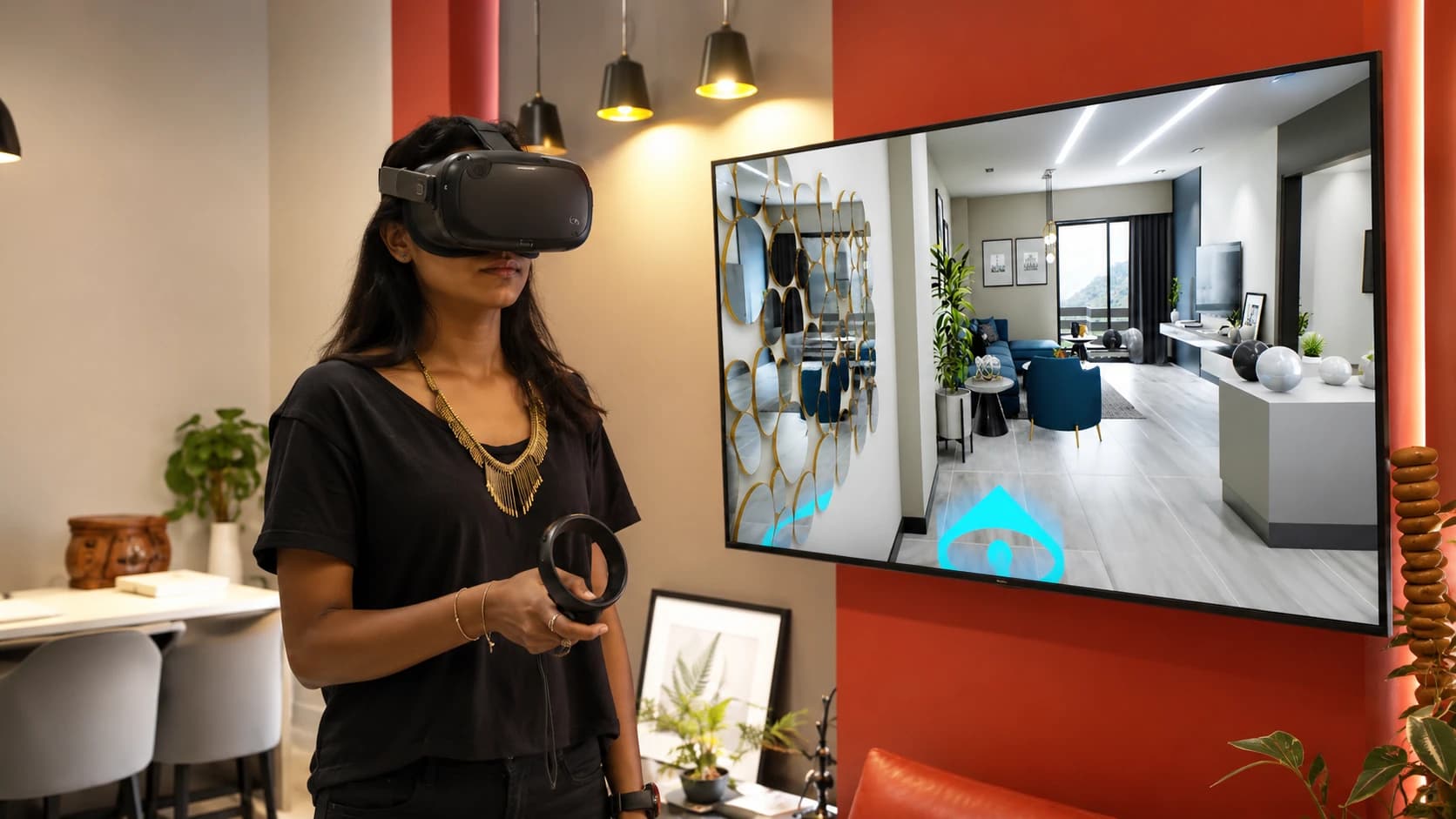
360 virtual tours vs static renders is one of the most common questions developers ask when planning a launch. Both show a property that is not built yet, but they do different jobs. Static renders create the first impression. Tours let buyers explore and build confidence. This article compares the two, explains how web-based tours work, and helps you decide what your project needs.
Key takeaways: 360 virtual tours vs static renders
Static renders are the fastest way to make a strong first impression in ads and brochures.
360 tours let buyers explore a home at their own pace, which answers more of their questions.
Interactive experiences are especially useful for off-plan buyers who cannot visit.
Modern tours run in a web browser on phones, desktops and VR headsets.
Most launches benefit from both, built from the same 3D model.
The Rise of Interactive Buyer Experiences in Off-Plan Marketing
Off-plan buyers are asked to commit to something that does not exist yet. For years, they relied on a brochure, a scale model and a show apartment. Each has limits. A brochure shows only what the photographer chose. A scale model is too small to feel. A show apartment is expensive and represents only one unit type.
Interactive experiences fill that gap. A buyer can step into a unit, look around, move to the balcony and check the view. They can do this at a sales center, at home, or from another country. That freedom is why interactive formats have spread quickly in off-plan marketing.
What Engagement Data Says About Interactive Pages
Developers often ask for hard numbers on engagement. Published studies exist, but results vary widely by project, audience and how a tour is presented. The safest guide is your own analytics. Track time on page, tour starts, completed walkthroughs and enquiries from pages with and without a tour.
What is consistent is how buyers behave. People who open a tour tend to explore several rooms and return to it before deciding. That repeat use is a strong signal of serious interest, and it gives sales teams warmer leads to follow up.
360 Virtual Tours vs Static Renders: What Each Does Best
The debate over 360 virtual tours vs static renders is easier once you see their different strengths.
Static renders do best at:
Making an instant, striking impression in ads, billboards and listings.
Controlling exactly what the buyer sees, with perfect composition and lighting.
Working everywhere, from print to social media, with no special software.
360 tours do best at:
Showing how rooms connect, how big they feel and what each window sees.
Answering detailed questions without a sales visit.
Keeping buyers engaged for longer and bringing them back.
A useful way to think about 360 virtual tours vs static renders is attention and confidence. Renders win attention. Tours build confidence. Most buyers need both before they commit.
Technical Execution of Web-Based 360 VR Experiences
Modern tours are built from the same 3D model as the renders. The studio renders a set of panoramic images from chosen points in each space. Software then links these points, so the buyer can move from room to room. Hotspots can add information, such as finishes, dimensions or a floor plan.
Most tours now run in a normal web browser. That matters, because buyers will not install an app to look at an apartment. A link shared by a broker opens straight to the tour. Our VR and 360 tours are built this way, and our web tours extend the same idea to whole buildings and amenities.
Performance is part of quality. Panoramas must be compressed carefully so they load quickly on mobile data. A tour that takes too long to open loses the buyer before it starts.
Multi-Platform Compatibility: Mobile, Desktop and VR Headsets
Buyers use many devices, so tours must work across them:
Mobile phones. Most buyers first open a tour on a phone, where swiping and the phone's motion sensor let them look around.
Desktop and laptop. Larger screens suit detailed exploration and side-by-side comparison with plans.
VR headsets. In sales galleries, a headset gives a true sense of ceiling height and room scale.
Designing for all three from the start avoids rebuilding the tour later. It also lets one tour serve the website, broker links and the sales center.
Integrating Interactive Features into Real Estate Websites
A tour adds most value when it sits inside the buying journey. On a project website, it can open from each unit type, next to the floor plan and price range. On a unit selector, it can open for the exact apartment a buyer is considering. Clear calls to action after the tour, such as booking a call or requesting a payment plan, turn interest into enquiries.
Search visibility matters too. A tour on its own page with no text gives search engines little to read. Pairing it with descriptive content, floor plans and FAQs helps the page rank and explains the project to buyers who prefer to read. For more on the benefits, see our article on virtual tours for real estate.
360 Virtual Tours vs Static Renders: How to Choose
For most launches, the answer to 360 virtual tours vs static renders is not either-or. A practical split looks like this:
Use static renders for advertising, brochures, billboards and listings.
Add a 360 tour for each main unit type and key amenity.
Use VR in the sales gallery for buyers close to a decision.
If budget is tight, start with strong renders and one tour of the most popular unit type. Measure how buyers use it, then expand. Because both come from one model, adding tours later costs less than starting from scratch.
At Mimar Studios, we have completed 270+ projects across 14 countries since 2019, delivering photorealistic stills, cinematic animation, VR experiences and 360 web tours. To plan a mix for your project, start with our 3D visualization and interactive teams.
Frequently asked questions
- Are 360 virtual tours better than static renders?
- Neither is better in every case. Static renders win attention in ads and brochures, while 360 tours build confidence by letting buyers explore. Most off-plan launches use both, built from the same 3D model so they always match.
- Do 360 tours work on mobile phones?
- Yes. Modern tours run in a web browser, so buyers open them from a link without installing anything. On a phone they can swipe or move the device to look around, which is how most buyers first see a tour.
- How are 360 tours made for buildings that are not built yet?
- A studio builds an accurate 3D model from the drawings, renders panoramic images from chosen points in each room, and links them into a tour. Hotspots can add details such as finishes, dimensions and floor plans.
- How can I measure whether a tour helps sales?
- Track tour starts, time spent, completed walkthroughs and enquiries in your website analytics, and compare pages with and without a tour. Your own data is more reliable than general figures, which vary widely between projects.
- Can VR headsets be used in a sales center?
- Yes. A headset lets buyers experience room height and proportions at full scale, which images and screens cannot fully convey. Many developers use VR for buyers who are close to a decision and want certainty.